
L.I.F.E. WELLNESS DIVISON
Support for the Mind, Heart, and Human Experience
LIFE Network Agency’s Wellness Division provides education, guidance, and support for creators and community members navigating life’s hardest moments.
We believe healing grows through connection — and no one should walk their struggles alone.
“🌟You Matter. Your Life Matters.
You Don’t Have to Face Your Struggles Alone.”
Our Wellness Division is here to give guidance, support, and hope for anyone facing mental health challenges, addiction, trauma, or emotional hardship.
A healthier life begins with one choice — to reach out, learn, and take the next step.”
L.I.F.E. WELLNESS DIVISON SUPPORT
(Click hyperlink to be guided to that specific section)
-
Suicide is never the only option. This section provides crisis signs, safety steps, and direct hotline resources to support anyone who feels overwhelmed by hopelessness or emotional pain. Help is always available.
https://www.lifenetworkagency.com/wellness#suicide-awareness
-
Addiction affects the whole person — but recovery is real and possible. Explore guidance on recognizing addiction patterns, seeking treatment, and finding community support for long-term healing.
-
No one deserves to live in fear. Learn the signs of domestic violence, how to create a safety plan, and where to find confidential help, protection, and emergency resources.
-
Depression and anxiety can cloud your days and steal your peace. This section offers coping tools, grounding techniques, and pathways to support for those struggling with overwhelming thoughts or emotions.
-
Trauma leaves invisible wounds. Our trauma resources help you understand triggers, practice grounding, and explore avenues for trauma-informed care and long-term recovery.
-
When relationships drain your energy or control your identity, healing becomes essential. Learn how to identify codependency, set boundaries, and rebuild self-worth.
-
Grief changes us — but you don’t have to face it alone. This section offers comfort, understanding, and support tools for navigating loss at your own pace.
-
ood and self-image challenges often run deeper than they appear. Explore supportive guidance, early warning signs, and connections to professional help for those navigating body-related struggles.
-
Life and livestreaming can be emotionally draining. Learn how to manage burnout, reduce stress, set boundaries, and maintain balance as a creator and as a person.
-
Creators face unique pressures — from nonstop engagement to emotional fatigue. This section helps creators stay grounded, set boundaries, and manage the emotional load of community interaction.
-
Self-harm is a sign of emotional overload, not failure. This section offers understanding, harm-reduction steps, and support resources to help navigate moments of emotional crisis.
-
Financial stress impacts mental and emotional well-being. Explore budgeting guidance, relief resources, and tools for managing money-related anxiety and life instability.
-
Feeling alone is more common than people admit. Learn how to reconnect, rebuild confidence, and create supportive social structures both online and offline.
-
Anger is a real emotion — and understanding it is powerful. This section provides calming techniques, coping tools, and communication strategies to regain control in tough moments.
You Are Not Alone
Many people who struggle to heal, find peace, or overcome adversities, often feel like they are the first and only ones facing their particular situation. That could lead to feelings of isolation and hopelessness. However, the truth is many of us are navigating through similar difficulties in our lives.
This section is dedicated to anyone who wants to share their story about their healing journey, to share what works for them in helping to recenter themselves, and to maybe help someone realize that there have been people struggling to swim in this ocean, and they made it to shore.
*With respect to everyone’s confidentiality, all stories will be posted anonymously. Please email your story to herb@lifenetworkagency.com and include YOU ARE NOT ALONE in the subject line.
Remember, you are not an island. You are a unique voice among the many in this choir.
—Anonymous Submission—
“For years I struggled with anxiety and depression but nobody ever knew. At work I was productive, socially I was always in a good mood, and at home I was upbeat and available for my family. But alone, at night, in the dark, I became a different person. I hated myself, I couldn’t stand the sight of myself in the mirror, and even seeing a photo of myself sent me into a mental spiral of self-hatred and low self-esteem. However, nobody knew.”
“I knew there was something “wrong” but I was too proud to seek help. I was too afraid of what people might think. I was afraid of what it may do to my reputation both professionally and at home. So I sat with my “demons” nearly every night and let them destroy me. All while wearing a mask in front of everyone else that said “Hey, I’m OK!” However, I was anything but and nobody knew.”
“It wasn’t until I was so far down into a ditch one night, alone, and contemplating the final decision, that I decided to reach out for some help. I dialed the 988 number, not knowing what to expect, and frankly I’m still not sure what compelled me to do it to this day, but I’m glad I did. The person on the other end sat with me, listened to me, and pointed me in the right direction towards fixing myself. And now someone knew.”
“If I hadn’t reached out that night, If I hadn’t made the decision to “tell someone”, I’d probably STILL be in that ditch. Maybe trying to climb out or maybe in it for good. But now people knew, and it saved me.”
“I’m sharing this anonymously because I want people to know that if I had talked to someone earlier, if I had simply shared my feelings with someone, if I had just answered honestly when a friend asked “how are you?” I may have never ended up in that ditch.” - Anonymous and healing
💚 SUICIDE AWARENESS & PREVENTION
You are not alone. Your pain is real — and help is always available.
🌿 Understanding Suicide Awareness
Suicidal thoughts can affect anyone, at any age, in any life situation.
Feeling hopeless, overwhelmed, or emotionally exhausted does not make you weak — it makes you human.
This section exists to offer clear signs, supportive guidance, and life-saving resources for anyone experiencing emotional pain or for those supporting a loved one.
Help is always available, and reaching out is a powerful step toward healing.

“If you see something.....say something. It is better to have said something and been wrong, then to have said nothing and been right.”
⚠️ Warning Signs
Recognizing the warning signs can save a life. These signs may appear slowly or suddenly.
Emotional Signs
Extreme sadness, hopelessness, or feeling trapped
Withdrawal from friends, family, or community
Feeling like a burden to others
Sudden mood shifts — intense sadness, then calmness
Emotional numbness or loss of interest in life
Verbal Signs
“Everyone would be better off without me.”
“I can’t do this anymore.”
“I just want the pain to stop.”
“I don’t want to be here.”
Behavioral Signs
Talking about wanting to die or disappear
Increased use of alcohol or drugs
Reckless behavior
Giving away possessions
Searching online for suicide methods
Saying goodbye or “checking out” emotionally
🛡️ Safety Steps If You Feel Unsafe
If you are overwhelmed or feel you may be in danger:
Tell someone you trust.
Choose a friend, family member, mentor, or colleague.
Reach out to a crisis hotline immediately.
Talking with someone trained to help can ground you and keep you safe.
Remove harmful items from your environment.
Ask someone to help if needed.
Focus on the next 5 minutes — not the future.
Staying present can help slow overwhelming emotions.
5. You do not have to fix everything today.
Just stay safe right now — that is the priority.
🧠 Common Risk Factors
While suicide is complex, certain factors can increase risk:
Depression, anxiety, or PTSD
Recent trauma or loss
Chronic pain or serious medical issues
Substance abuse
Relationship or family conflict
Isolation or loneliness
Financial or legal stress
History of self-harm or previous suicide attempts
Risk does not mean inevitable — it means support is crucial.
🤝 How to Help Someone Else
If someone you care about is struggling:
Listen without judgment.
Let them talk. Don’t dismiss or minimize their feelings.
Stay with them if they feel unsafe.
Your presence can make all the difference.
Encourage professional help.
They are not alone — crisis counselors exist for this moment.
Avoid phrases like “just be positive” or “others have it worse.”
These minimize pain and can push someone further away.
Take it seriously.
If they mention suicide, assume they need support immediately.
📞 Crisis Hotlines & Immediate Help
United States – Suicide & Crisis Lifeline
Call or Text: 988
Available 24/7
Confidential and free
United States Veterans Crisis Line
Dial 988, then press 1
Or text 838255
🌎 International Suicide Hotlines
Visit: https://www.opencounseling.com/suicide-hotlines
💬 Crisis Text Line (U.S., U.K., Canada)
Text HOME to 741741
24/7 text support
🛑 Emergency Disclaimer
This website does not provide crisis intervention or professional mental health services. If you are in immediate danger or think someone may be at risk, call your local emergency number immediately.
💬 Words of Support
Recovery doesn’t require perfection — it requires honesty.
Relapse does not erase progress.
Asking for help is not a failure; it’s an act of strength.
You are allowed to heal at your own pace.
Your past does not disqualify you from a meaningful future.
If today is heavy, breathe. If today is good, hold onto it. Both matte
Addiction & Recovery Support
You are not broken.
You are not weak.
And you are not alone.
Addiction and recovery are not straight lines — they are human stories filled with setbacks, courage, progress, and growth. Whether you’re struggling yourself, supporting someone you love, or just trying to understand… you are welcome here.
This space exists to remind you of one thing above all else:
There is hope — even on the days you can’t feel it.
A Gentle Truth
Not everyone will experience all of these signs.
And having one or two doesn’t automatically mean addiction.
What matters most is pattern + impact.
If substance use is:
Taking more than it gives
Causing harm to your health, relationships, or peace
Becoming harder to control
…it may be time to pause and reach out for support.
If This Feels Familiar
You don’t have to figure this out alone.
Recognizing something isn’t right is not failure — it’s awareness.
Help exists. Healing is possible. And change can start with one honest conversation.
📞 Recovery & Addiction Resources (U.S.)
SAMHSA National Helpline
📞 1-800-662-HELP (4357)
🕒 24/7 | Free | Confidential
Support for:
Substance use disorders
Mental health challenges
Treatment referrals
Family members seeking guidance
Alcoholics Anonymous (AA)
🌐 https://www.aa.org
Peer-led support groups available worldwide
Narcotics Anonymous (NA)
🌐 https://www.na.org
Support for anyone seeking freedom from substance use
Celebrate Recovery
🌐 https://www.celebraterecovery.com
Faith-based recovery support for all types of struggles
Veterans & First Responders
VA Crisis Line: Call or text 988, then press 1
First Responder Support Network: https://www.frsn.org
You don’t have to carry the weight alone.
🤍 A Note From Us
This page is not a replacement for professional care.
It’s a place to pause, breathe, and remember that help exists — and so does hope.
If you’re ready to talk, reach out.
If you’re not, stay. We’re glad you’re here.
Signs of Addiction
Addiction doesn’t always look the way people expect.
It doesn’t always mean “rock bottom,” and it doesn’t mean someone is a bad person.
Often, it looks like someone who is trying to cope.
⚠️ Emotional & Mental Signs
Using substances to numb stress, pain, or emotions
Feeling anxious, irritable, or restless when not using
Loss of interest in things that once mattered
Shame, guilt, or secrecy around use
Rationalizing or minimizing behavior (“It’s not that bad”)
Mood swings or emotional detachment
Feeling stuck, hopeless, or overwhelmed
⚠️ Behavioral Signs
Increased use over time to feel the same effect
Difficulty stopping or cutting back
Hiding or lying about substance use
Isolating from family or friends
Neglecting responsibilities at work, home, or school
Risk-taking behavior or poor decision-making
Defensiveness when the topic is brought up
⚠️ Physical Signs
Changes in sleep patterns (too much or too little)
Noticeable weight changes
Bloodshot eyes, frequent illness, or fatigue
Shaking, sweating, nausea, or headaches
Decline in personal hygiene or appearance
Increased tolerance or withdrawal symptoms
Domestic Violence & Abuse Support
Abuse is not always visible.
It does not always involve bruises.
And it is never your fault.
Domestic violence and abuse can happen to anyone — regardless of age, gender, background, income, or relationship length. If something doesn’t feel right, your feelings matter.
This space exists to help you recognize the signs, understand your options, and know that support is available — safely and confidentially.
.
🚩 Signs of Domestic Violence & Abuse
Abuse can be physical, emotional, psychological, sexual, financial, or digital. Many survivors experience more than one form.
Emotional & Psychological Abuse
Being constantly criticized, insulted, or humiliated
Walking on eggshells to avoid conflict
Gaslighting (being made to doubt your reality or memory)
Threats of harm to you, children, pets, or themselves
Extreme jealousy or possessiveness
Isolation from friends, family, or support systems
Physical Abuse
Hitting, slapping, pushing, choking, or restraining
Blocking exits or preventing you from leaving
Damaging property to intimidate
Threats or use of weapons
Injuries explained away out of fear or shame
Sexual Abuse
Pressure, coercion, or force to engage in sexual activity
Ignoring consent or boundaries
Using sex as control, punishment, or obligation
Reproductive control (tampering with birth control, pregnancy coercion)
Financial Abuse
Controlling access to money or accounts
Preventing you from working or sabotaging employment
Monitoring or restricting spending
Forcing debt or using money to control decisions
Digital & Technological Abuse
Monitoring phones, messages, or social media
Demanding passwords or location sharing
Harassment through texts, calls, or online platforms
Using technology to threaten or track you
📞 Confidential Help & Resources (U.S.)
National Domestic Violence Hotline
📞 1-800-799-SAFE (7233)
💬 Text START to 88788
🌐 https://www.thehotline.org
Available 24/7 for:
Crisis support
Safety planning
Local shelter and legal resources
Confidential chat options
For Men & LGBTQ+ Survivors
1in6: https://www.1in6.org
The Network/La Red: https://tnlr.org
Abuse does not discriminate — and help is for everyone.
Love is Respect (Teens & Young Adults)
📞 1-866-331-9474
💬 Text LOVEIS to 22522
🌐 https://www.loveisrespect.org
RAINN – Sexual Assault Support
📞 1-800-656-HOPE (4673)
🌐 https://www.rainn.org
❤️ If You’re Supporting Someone Else
Listen without judgment
Believe them
Avoid pressuring them to leave
Help them connect with professional resources
Let them move at their own pace
Your support can be life-changing.
☕ A Gentle Reminder
If you’re reading this and something inside you feels heavy or familiar — trust that feeling.
You deserve:
Safety
Respect
Autonomy
Peace
Help does not require certainty. It only requires reaching out.
Listen to Leslie Morgan Steiner as she talks about why victims stay, she tells her story.
🤍 From L.I.F.E. Network Agency
This space exists to remind you that your life matters — and that healing is possible, even if the path feels unclear right now.
You are not weak.
You are not alone.
And you are not to blame.

Anxiety & Depression
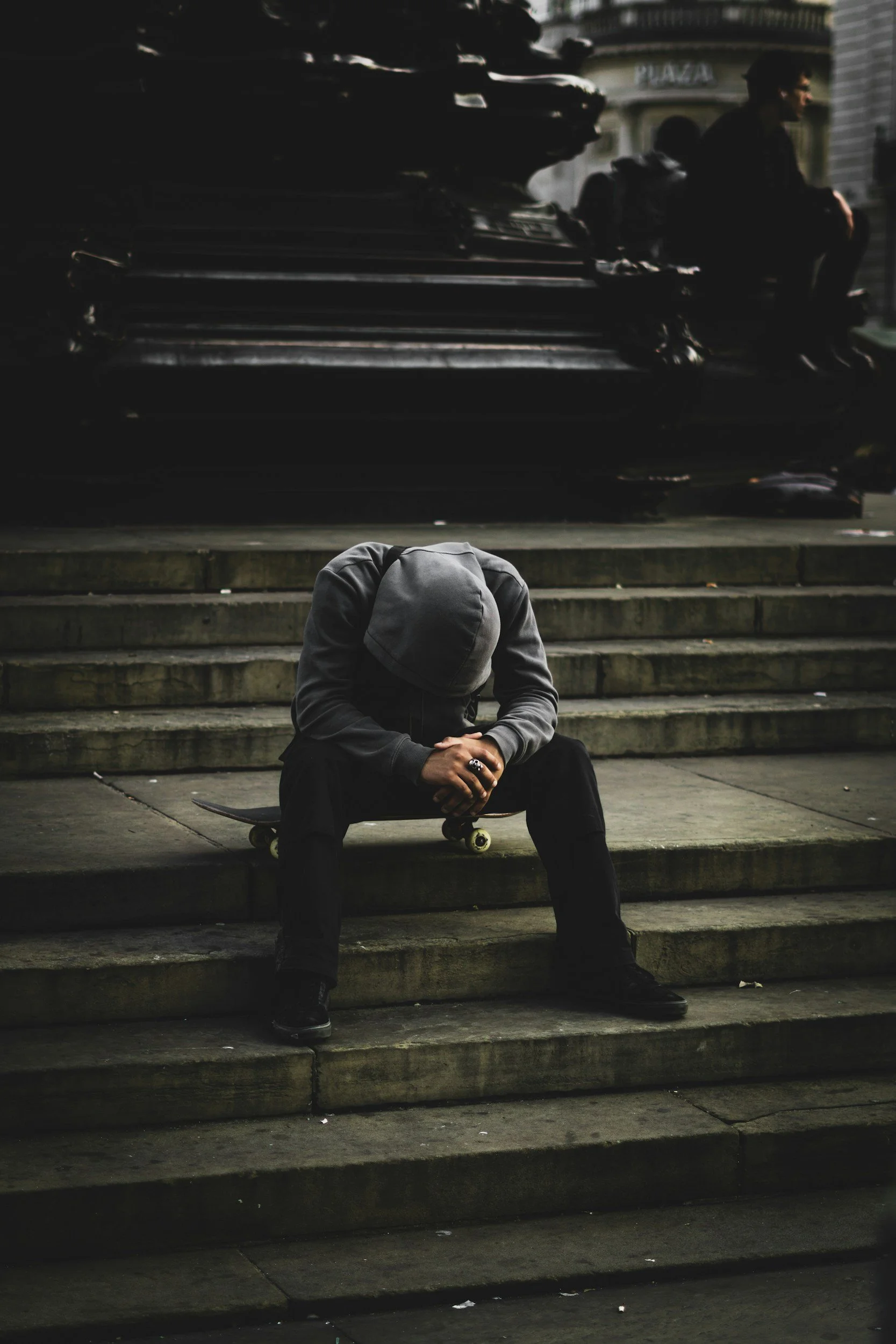
You’re not broken. You’re human — and you’re not alone.
Anxiety and depression can feel heavy, confusing, and exhausting. Sometimes they show up quietly. Sometimes they hit like a wave. Either way, there’s help, there’s hope, and there are steps you can take today.
Quick note: This page is for support and education — not a medical diagnosis. If you’re in immediate danger or feel like you may harm yourself, skip to the Crisis Support section at the bottom.
What Anxiety Can Look Like
Anxiety isn’t “just worrying.” It can show up in your body, your thoughts, and your relationships.
Common signs of anxiety:
Racing thoughts, overthinking, or “what if” loops
Tight chest, shortness of breath, rapid heartbeat
Restlessness, irritability, feeling on edge
Trouble sleeping or waking up with a “rush”
Stomach issues, nausea, headaches, muscle tension
Avoiding places/people/things to feel “safe”
Panic attacks (sudden intense fear + physical symptoms)
If this sounds like you: you’re not weak — your nervous system is trying to protect you.
Tools You Can Use Today
These aren’t “fixes.” They’re support tools — like a handrail on a steep staircase.
1) The 60-Second Reset (Grounding)
Try this if your mind is racing:
Name 5 things you can see
4 things you can feel
3 things you can hear
2 things you can smell
1 thing you can taste
Slow breaths. Shoulders down. Jaw unclench.
How to Support Someone You Care About
If you’re trying to help a friend/family member:
What to say:
“I’m glad you told me.”
“You don’t have to carry this alone.”
“Do you want advice, or do you want me to just listen?”
“Can I sit with you while you call/text someone for support?”
What not to say (even if you mean well):
“Just be positive.”
“Others have it worse.”
“Snap out of it.”
“You’re fine.”
What Depression Can Look Like
Depression isn’t always crying. Sometimes it’s numbness. Sometimes it’s just “getting through the day.”
Common signs of depression:
Feeling down, empty, or hopeless
Losing interest in things you used to enjoy
Low energy, fatigue, “heavy body” feeling
Changes in sleep (too much or too little)
Changes in appetite/weight
Trouble focusing or making decisions
Feeling guilty, like a burden, or “not enough”
Thoughts like “what’s the point?” or wanting to disappear
Important: If thoughts of self-harm show up, you deserve support immediately — see Crisis Support below.

2) Box Breathing (For Panic or Spiraling)
Inhale 4
Hold 4
Exhale 4
Hold 4
Repeat 4 rounds.
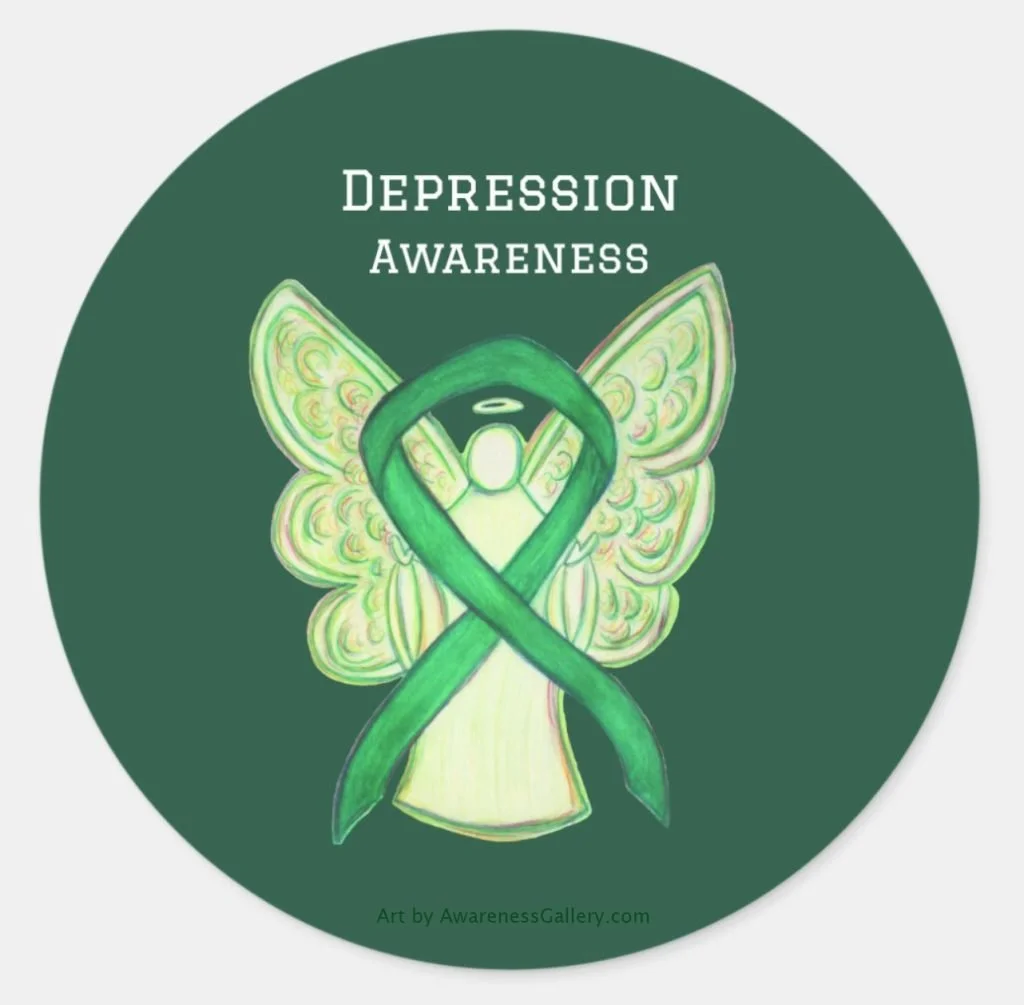
Anxiety and Depression Association of America (ADAA)
Best for: Anxiety-specific tools and coping strategies
Self-help tools and worksheets
Therapist directory
Evidence-based coping techniques

3) The “Next Right Thing”
When depression makes everything feel too big:
Don’t focus on the whole day.
Pick one small action:
drink water
step outside for 2 minutes
shower
text one person
eat something with protein
Small wins count. A lot.
Community Support
Sometimes the most powerful thing is knowing someone understands.
We believe:
You deserve support without shame.
You don’t have to earn rest.
Healing is not linear.
Asking for help is strength.
(If you want, we can add a “Safe Place Statement” here that matches your brand voice.)
Mental Health America (MHA)
Best for: Self-assessments & early screening
Free anxiety and depression screenings
Workplace & stress resources
Youth and adult support
PTSD & Trauma Healing
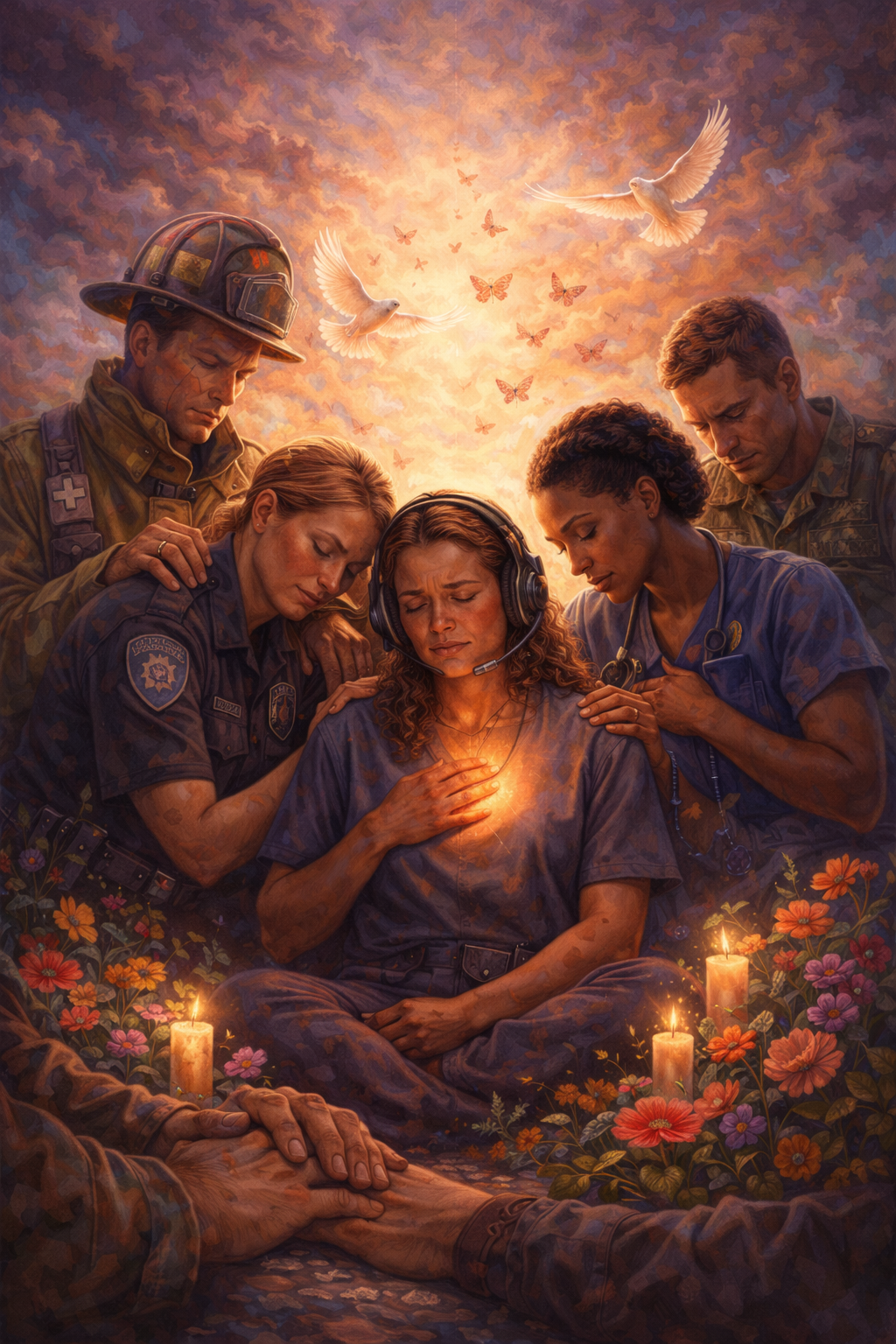
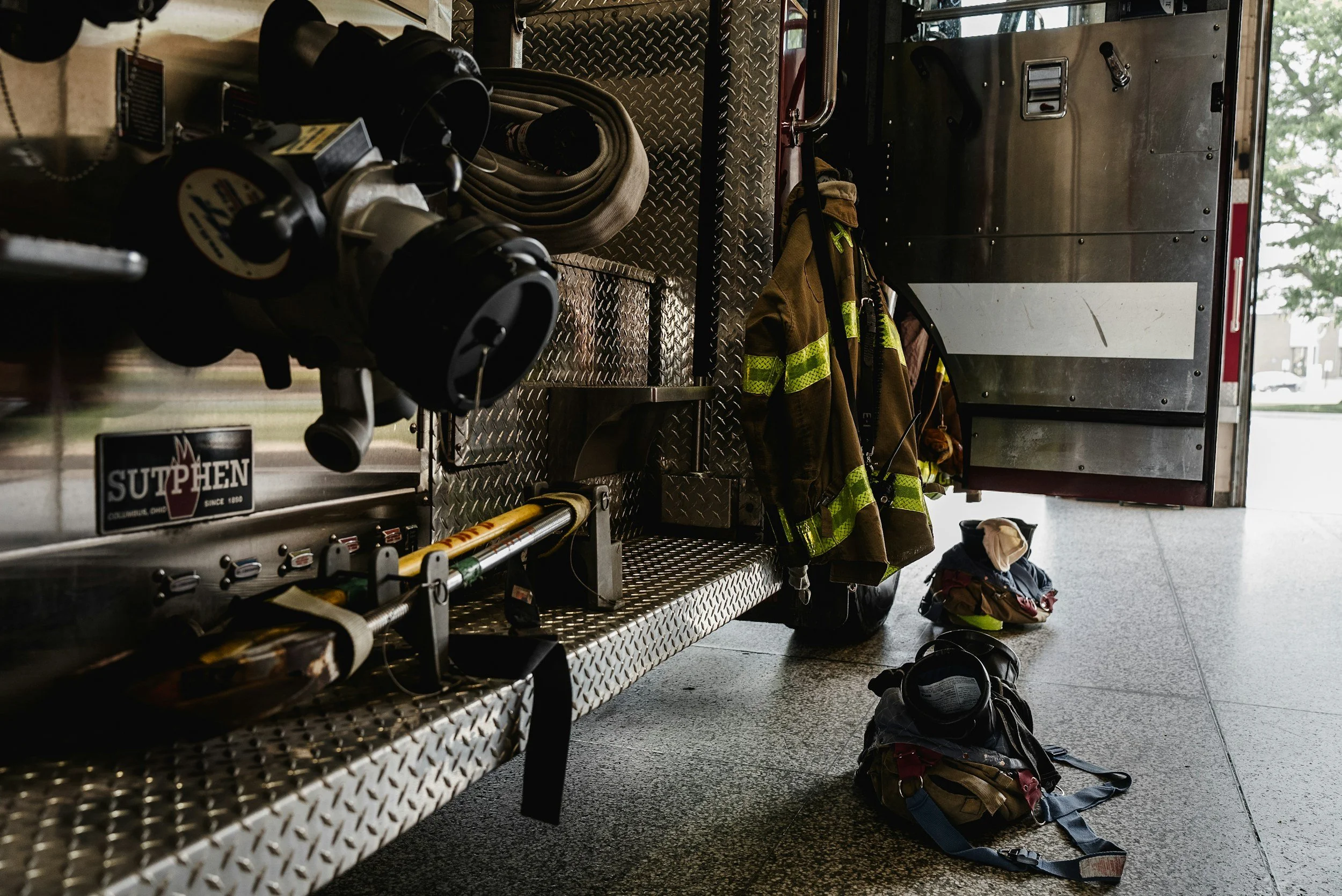
First responders and families of those serving, this is for you.
🧡 Immediate Help & Crisis Support (24/7)
If you or someone you love is in immediate danger or emotional distress, please reach out right away.
988 Suicide & Crisis Lifeline
📞 Call or Text 988
24/7 confidential emotional support in the U.S.
👉 https://988lifeline.org
Veterans Crisis Line
📞 Call 988, then press 1
📱 Text 838255
Support for veterans, service members, and their families
👉 https://www.veteranscrisisline.net
Crisis Text Line
📱 Text HOME to 741741
Free, confidential text support anytime
👉 https://www.crisistextline.org
Disaster Distress Helpline
📞 Call or Text 1-800-985-5990
Emotional support after disasters or traumatic events
👉 https://www.samhsa.gov/find-help/disaster-distress-helpline
Support, Understanding, and Resources for the Healing Journey
Trauma changes how we experience the world.
It can affect how we think, feel, sleep, connect with others, and even how safe we feel inside our own bodies. For some, trauma comes from a single event. For others, it builds slowly over time through repeated stress, loss, or emotional harm.
There is no single way trauma shows up — and there is no single way to heal.
At LIFE Wellness, we believe healing begins with understanding, compassion, and support — not judgment or pressure to “move on.”
One of the hardest parts of trauma recovery is the expectation that healing should follow a straight line. It doesn’t. Some days feel lighter. Others feel heavy again. Progress can look like setbacks — and that doesn’t mean you’re failing. Healing often happens in layers, not timelines. You are not broken because you still struggle. You are human.
Understanding PTSD and Trauma
Post-Traumatic Stress Disorder (PTSD) and trauma responses are not signs of weakness. They are natural reactions to overwhelming experiences.
Trauma can come from:
Accidents or medical events
Military service or first responder experiences
Abuse, neglect, or domestic violence
Sudden loss or grief
Chronic stress or emotional harm
Childhood trauma that carries into adulthood
Many people live with trauma without ever realizing that what they’re experiencing has a name — or that help is available.
💬 Peer Support & Community Connection
Sometimes the most healing thing is knowing someone else understands.
NAMI (National Alliance on Mental Illness)
Support groups, education, and a helpline
📞 1-800-950-NAMI (6264)
👉 https://www.nami.org
National Center for PTSD – Peer Support
Veteran and civilian trauma education and support options
👉 https://www.ptsd.va.gov/gethelp/peer_support.asp
Trauma Survivors Network
Peer support and trauma-informed resources
👉 https://www.traumasurvivorsnetwork.org
Common Signs and Symptoms
Trauma doesn’t always look the same from the outside. Some people appear “high-functioning” while struggling deeply inside.
You or someone you love may experience:
Anxiety, panic, or constant alertness
Flashbacks or intrusive memories
Emotional numbness or detachment
Difficulty sleeping or frequent nightmares
Irritability, anger, or sudden mood changes
Avoidance of certain places, people, or topics
Trouble concentrating or feeling present
Physical symptoms with no clear cause
Experiencing these symptoms does not mean something is wrong with you. It means your nervous system is trying to protect you.
Paths Toward Healing
There is no one “right” way to heal from trauma. What works for one person may not work for another — and that’s okay.
Healing may include:
Trauma-informed therapy or counseling
Support groups or peer connections
Mindfulness or grounding practices
Movement, exercise, or body-based therapies
Creative expression (writing, art, music)
Building safe routines and boundaries
Education about trauma and the nervous system
Healing doesn’t mean forgetting what happened.
It means learning how to live without being controlled by it.
When to Reach Out for Help
If trauma symptoms are interfering with daily life, relationships, work, or your sense of safety, reaching out for support is a strong and courageous step — not a sign of weakness.
If you or someone you love is in immediate danger or experiencing thoughts of self-harm, please seek urgent help right away.
🧠 Professional Therapy & Treatment Resources
If you’re looking for trauma-informed care or counseling, these tools can help you find support near you.
SAMHSA Treatment Locator
Find licensed mental health and trauma-informed providers
👉 https://findtreatment.gov
Psychology Today – Trauma & PTSD Therapists
Search by location, insurance, and specialty
👉 https://www.psychologytoday.com/us/therapists/trauma-and-ptsd
National Institute of Mental Health (NIMH)
Education and guidance on PTSD and trauma treatment
👉 https://www.nimh.nih.gov/health/topics/post-traumatic-stress-disorder-ptsd
🎖️ Veteran, First Responder & Healthcare Worker Support
Specialized resources for those who serve and care for others.
Wounded Warrior Project – Mental Wellness
PTSD programs and support for veterans
👉 https://www.woundedwarriorproject.org/programs/mental-wellness
Warrior Care Network
Intensive PTSD treatment programs for veterans
👉 https://www.warriorcarenetwork.org
Save A Warrior
Trauma recovery programs for veterans and first responders
👉 https://saveawarrior.org
Frontline Workers & Healthcare Support (Emotional PPE)
Resources for nurses, doctors, dispatchers, and frontline workers
👉 https://emotionalppe.org
A Final Word from LIFE Wellness
Healing from trauma takes time, patience, and support — but it is possible.
You are not weak for needing help.
You are not behind because you’re still healing.
You are not alone, even when it feels that way.
At LIFE Wellness, our mission is simple:
to remind people that healing is allowed, support is available, and hope is still real — even after trauma.
Codependency & Unhealthy Relationships
Learning to Love Without Losing Yourself
Many people find themselves in relationships where their happiness, identity, or sense of worth becomes tied to another person. This is called codependency. While caring for others is healthy, codependency happens when someone sacrifices their own needs, boundaries, or wellbeing to maintain a relationship.
Healthy relationships are built on mutual respect, personal responsibility, and emotional independence.
Signs of Codependency
People experiencing codependency may notice patterns like:
• Feeling responsible for another person’s emotions or behavior
• Difficulty saying no or setting boundaries
• Constantly trying to “fix” or rescue someone
• Fear of abandonment or rejection
• Losing personal identity in the relationship
• Staying in relationships that are emotionally unhealthy
• Feeling guilty when prioritizing their own needs
Codependency Self-Assessment
Are You Losing Yourself in a Relationship?
This self-assessment is designed to help you reflect on patterns that may point to codependency. Answer each question based on how you typically feel or behave in close relationships.
0 = Never | 1 = Sometimes | 2 = Often | 3 = Almost Always
Important: This quiz is not a medical or psychological diagnosis. It is a reflection tool intended to encourage self-awareness.
If you are in a harmful, controlling, or abusive relationship, consider reaching out for support from a licensed professional or a trusted support organization.
Signs of an Unhealthy Relationship
Not all unhealthy relationships are obvious. Some warning signs include:
Control
One partner makes most decisions
Monitoring phones, messages, or social media
Emotional Manipulation
Guilt-tripping
Gaslighting
Silent treatment
Lack of Respect
Dismissing feelings
Constant criticism
Isolation
Being discouraged from spending time with friends or family
Walking on Eggshells
Feeling afraid to express yourself